English
 Português

Building Protection Against Explosions: Discover Blast Mitigation Fabric (BMF) Technology
By Eco Reflexus - 23/10/2026 - 0 comments
Protecting buildings and infrastructure against explosions is a growing concern in industrial sectors, strategic facilities, and environments that require high levels of security. To address these challenges, structural reinforcement solutions are available to increase the resistance of buildings to blast waves without necessarily requiring the replacement of existing structures.
One such solution is Blast Mitigation Fabric (BMF), a technical material developed to reinforce walls and reduce structural damage caused by explosions.
Portugal Bunkers & Shelters offers this protective technology, designed for construction, modernisation, and security enhancement projects involving buildings and infrastructure.
What Is Blast Mitigation Fabric (BMF)?
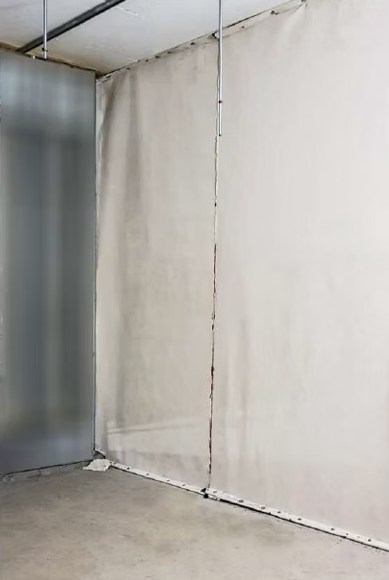
Blast Mitigation Fabric is a high-strength technical fabric designed to reinforce walls and structures exposed to the effects of explosions.
Its primary function is to distribute the forces exerted by blast waves across the protected surface, helping to reduce the risk of collapse in concrete, masonry, and other types of walls.
This technology can be applied to both interior and exterior walls, allowing it to be integrated into existing buildings or new construction projects.
Unlike interventions that require extensive structural modifications, BMF provides an alternative reinforcement solution that can be adapted to the characteristics and protection requirements of each facility.
How Does This Protection Technology Work?
During an explosion, the blast wave exerts intense pressure on nearby surfaces. Depending on the intensity of the explosion, the distance from the blast, and the structural characteristics of the building, this pressure can cause cracks, displacement of materials, or even wall collapse.
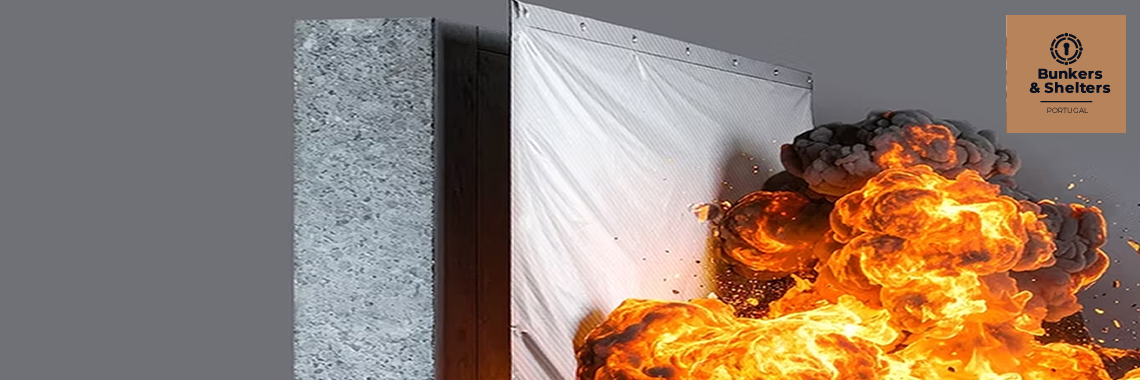
Blast Mitigation Fabric acts as an additional reinforcement layer, designed to distribute the forces generated by an explosion and help preserve the integrity of protected walls.
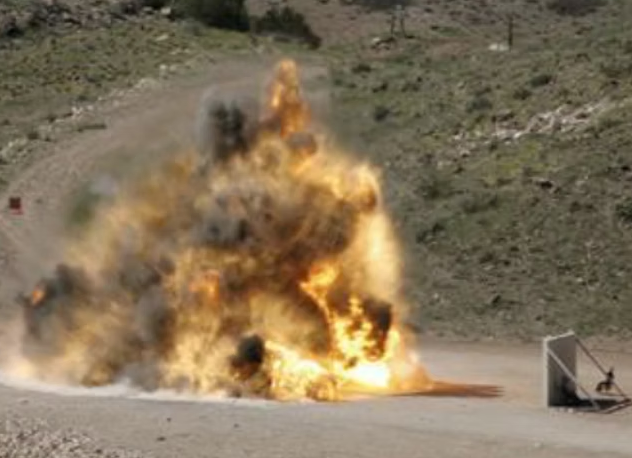
According to technical information provided by the manufacturer, this solution has undergone full-scale blast testing, including resistance tests involving direct impacts from 155 mm artillery rounds.
However, actual performance depends on the structural characteristics, installation conditions, and specific exposure scenarios.
Main Advantages of Blast Mitigation Fabric
One of the main characteristics of this technology is its ability to reinforce buildings and infrastructure without necessarily requiring the complete reconstruction of existing walls.
Its key advantages include:
- Blast protection: Developed to reduce the risk of wall collapse when exposed to blast waves.
- Application to existing structures: Suitable for modernisation projects and improvements to building safety.
- Installation versatility: Can be applied to interior and exterior walls, including concrete and masonry surfaces.
- Tested resistance: Subjected to full-scale blast testing, according to the manufacturer's technical information.
- Porous material: Allows surface ventilation and helps reduce condensation issues.
- Flame-retardant properties: Provides an additional safety feature.
- Paintable surface: Can be coated with commercially available paints, facilitating visual integration into the building.
These characteristics make BMF a solution worth considering for projects that aim to combine structural protection, adaptability to existing buildings, and specific security requirements.
Where Can Blast Mitigation Fabric Be Applied?
Blast Mitigation Fabric has been developed to meet the protection needs of different types of facilities, particularly in environments where there is a risk of explosion.
Its main applications include:
Industrial Facilities and Refineries
Certain industrial environments may be exposed to risks associated with accidental explosions, including vapour cloud explosions. Wall reinforcement can provide an additional measure of structural protection.
Government Buildings and Strategic Infrastructure
Public facilities, government buildings, and critical infrastructure may require specific protection solutions against external threats.
Military and Security Facilities
BMF can be integrated into reinforcement projects for military installations and other structures that require higher levels of protection against the effects of explosions.
Embassies and Diplomatic Facilities
In buildings subject to more demanding security requirements, structural reinforcement represents one possible measure for mitigating risks.
Bunkers, Shelters, and Protected Spaces
This technology may also be considered for reinforcing protected structures as part of a broader security solution, according to the technical requirements of each facility.
Is Reinforcing Existing Structures an Alternative to Building New Protected Spaces?
The construction of bunkers and specialised shelters is an option for certain threat levels and protection requirements. However, not every project requires the construction of an entirely new structure.
In some situations, modernising and reinforcing existing walls can represent a relevant alternative for improving the structural resistance of specific spaces.
Blast Mitigation Fabric supports this approach through the installation of an additional protective layer on selected walls.
It is important to emphasise that this type of reinforcement does not, on its own, replace a bunker or shelter specifically designed to withstand explosions. Overall protection also depends on factors such as the building's structure, doors, windows, roof, and other construction elements.
Portugal Bunkers & Shelters Offers Blast Protection Reinforcement Solutions
Portugal Bunkers & Shelters offers Blast Mitigation Fabric (BMF) as a solution for reinforcing walls and structures against the effects of explosions.
This technology addresses different protection needs, from modernising existing buildings to integrating additional security measures into new construction projects.
Each facility has its own characteristics and requirements. Therefore, selecting an appropriate protection solution should take into account the type of construction, identified risks, and the desired level of resistance.
Are you looking to improve the protection of a building or infrastructure against explosions?
Contact Portugal Bunkers & Shelters to learn more about Blast Mitigation Fabric and explore the solutions available for your project