English
 Português

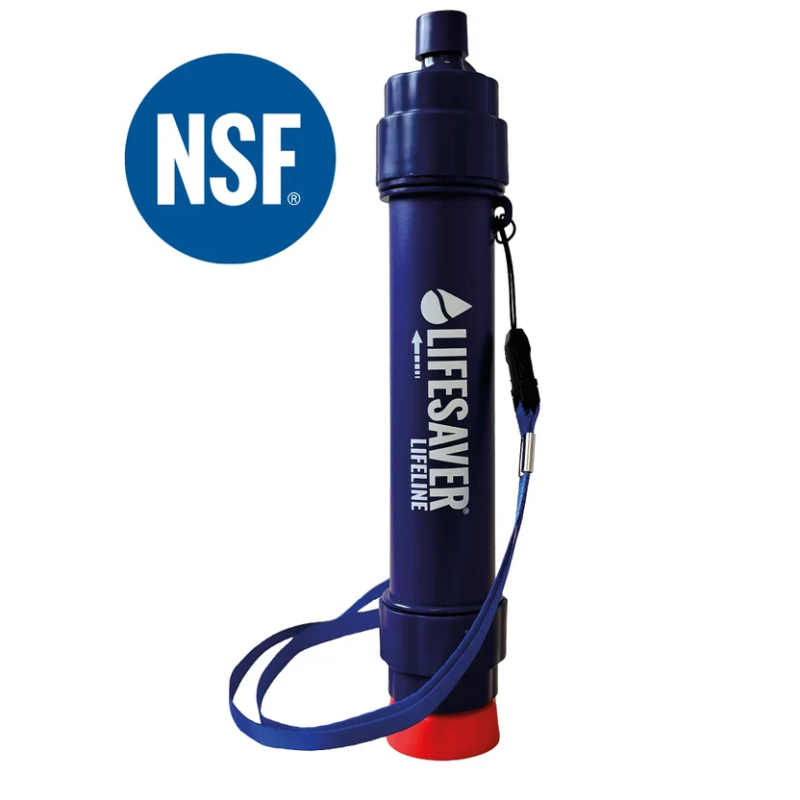


LifeSaver Lifeline | Emergency & Survival Water Filter
Product Description
The LifeSaver Lifeline is a portable water filtration system designed to provide access to filtered water in emergency situations, survival scenarios, outdoor activities, and locations where access to safe drinking water is limited or unavailable.
Equipped with ultrafiltration (UF) technology, it filters water from natural sources such as rivers, lakes, streams, and other freshwater sources by reducing bacteria, cysts, parasites, microplastics, and suspended particles.
The device also features a replaceable activated carbon filter, which helps reduce certain chemical contaminants and heavy metals while improving the taste and odour of the water.
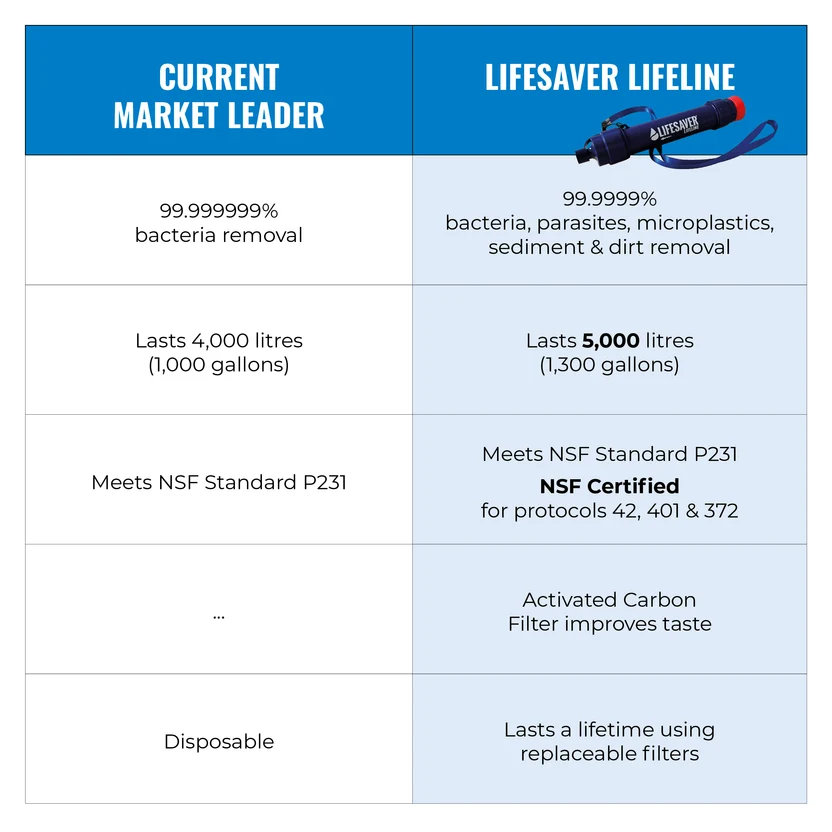
Weighing only 85 grams and offering a filtration capacity of up to 5,000 litres, the LifeSaver Lifeline is a compact, reusable solution designed for individual transport and inclusion in emergency kits, survival backpacks, and disaster preparedness equipment.
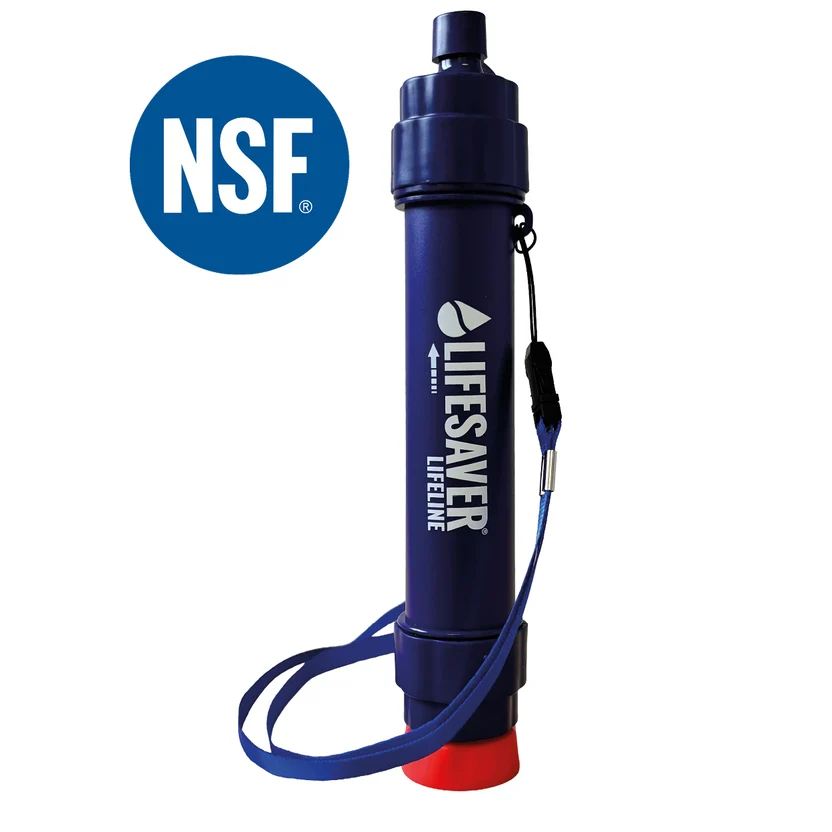
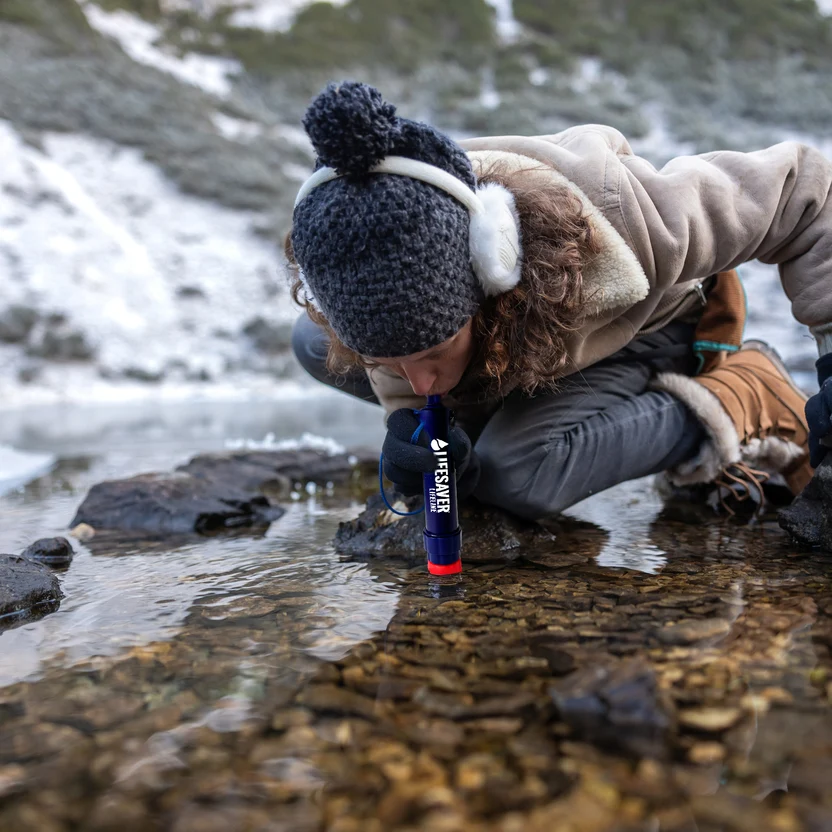
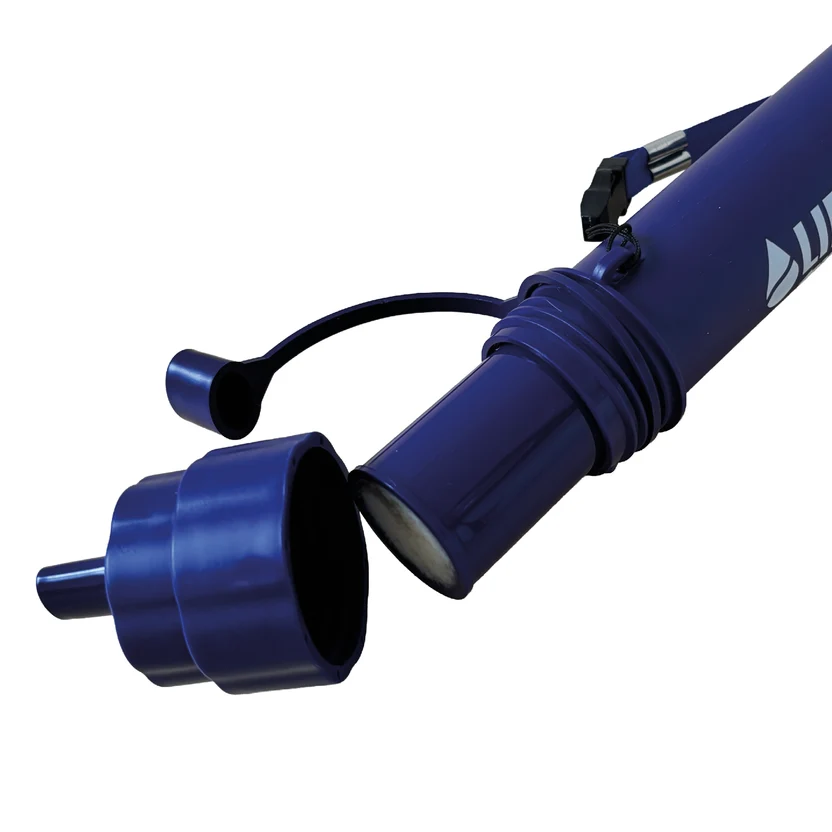

Its operation requires no electricity, batteries, or chemicals, allowing it to be used in remote environments and situations where essential services have been disrupted.
Advanced microbiological filtration: Ultrafiltration technology that reduces bacteria, cysts, parasites, and microplastics present in water.
High filtration capacity: Main filter cartridge capable of filtering up to 5,000 litres of water.
Activated carbon filter: Helps reduce certain chemical contaminants and heavy metals while improving the taste and odour of the water.
FailSafe technology: A system that progressively reduces water flow when the cartridge reaches the end of its service life, indicating that replacement is required.
Independent operation: Requires no electricity, batteries, water purification tablets, or other chemicals.
Immediate use: Straw-style suction filtration system that does not require waiting periods for water treatment.
Portable and compact: Lightweight, durable construction designed for transport in backpacks, bags, and emergency equipment.
Replaceable filters: Both the main filtration cartridge and activated carbon filter can be replaced, extending the service life of the device.
Dry storage: Does not require permanent storage in water and can be stored after complete cleaning and drying.
BPA-free construction: Outer housing made from materials free of bisphenol A.
Filtration Performance
Main filter cartridge capacity: Up to 5,000 litres
Activated carbon filter capacity: Up to 100 litres
Bacteria reduction: Greater than 99.99999%
Cyst reduction: Greater than 99.999%
Microplastic reduction: Greater than 99.999%
Initial flow rate: 0.5 litres per minute
Reduction of certain chemical contaminants and heavy metals: Through the activated carbon filter
Virus removal: No
Physical Specifications
Length: 220 mm
Width: 50 mm
Height: 50 mm
Dry weight: 85 g
Outer material: Durable, BPA-free construction
Operating method: Direct suction through the mouthpiece
Water storage capacity: No integrated water reservoir
Operation and Maintenance
Electrical power supply: Not required
Batteries: Not required
Chemical treatment: Not required
Replaceable main cartridge: Yes
Replaceable activated carbon filter: Yes
FailSafe technology: Yes
Dry storage: Yes, after complete cleaning and drying
Manufacturer's warranty: 2 years
Technical note: Filtration capacity and flow rate may vary depending on the composition and turbidity of the water being filtered.
Filtration Technology and Operation
The LifeSaver Lifeline uses an ultrafiltration membrane designed to retain microbiological contaminants and particles present in water.
During operation, water passes through the filtration system, which acts on different types of contaminants.
Bacteria
The membrane provides a microbiological reduction greater than 99.99999% for bacteria covered by the manufacturer's tests.
Cysts and Parasites
The system reduces protozoan cysts and other parasites present in contaminated water sources, helping to reduce the risks associated with their consumption.
Microplastics and Suspended Particles
The membrane retains microplastics and fine particles while reducing sediments responsible for water turbidity.
Chemical Contaminants and Heavy Metals
The activated carbon filter helps reduce certain chemical compounds and heavy metals while improving the taste and odour of the water. Its effectiveness depends on the specific contaminant and operating conditions.
FailSafe Technology
The LifeSaver Lifeline incorporates FailSafe technology, designed to reduce the flow rate when the main filter cartridge reaches the limit of its filtration capacity. This feature helps identify when cartridge replacement is required.
Use in Emergency and Survival Situations
The LifeSaver Lifeline is designed for use in environments where access to safe drinking water may be compromised, serving as a supplementary resource for emergency preparedness and response.
Natural Disasters and Emergency Situations
In the event of earthquakes, storms, floods, or other incidents that disrupt the public water supply, the LifeSaver Lifeline can be used as an alternative means of filtering freshwater from available sources.
Its filtration system reduces certain microbiological contaminants present in water without requiring electricity or complex water treatment systems.
In flood situations, water may be contaminated with sewage, fuel, chemicals, or viruses. In such cases, the LifeSaver Lifeline should not be considered sufficient on its own to make the water safe for drinking.
Prolonged Water Supply Disruptions
During extended interruptions to public water supply networks, the device can serve as a supplementary resource when alternative freshwater sources are available.
Its high filtration capacity and replaceable cartridge allow repeated use, provided that the equipment's operating conditions and limitations are respected.
Survival in Natural Environments
In situations involving isolation, long-distance hiking, or extended stays in remote areas, the LifeSaver Lifeline allows users to drink filtered water directly from suitable natural sources.
Its low weight and compact dimensions make it easy to carry without the need to transport large additional quantities of water, although maintaining an emergency supply of safe drinking water remains important.
Emergency Evacuation
The device can be included in evacuation backpacks, 72-hour survival kits, and personal emergency equipment.
Its portability allows it to be carried during emergency evacuations as a supplementary resource when access to safe drinking water is limited.
Camping and Outdoor Activities
Suitable for hiking, camping, mountaineering, travelling, and other outdoor activities where access to natural freshwater sources may be necessary.
It can be used directly or together with compatible accessories for water collection and filtration.
Methods of Use
Direct Use
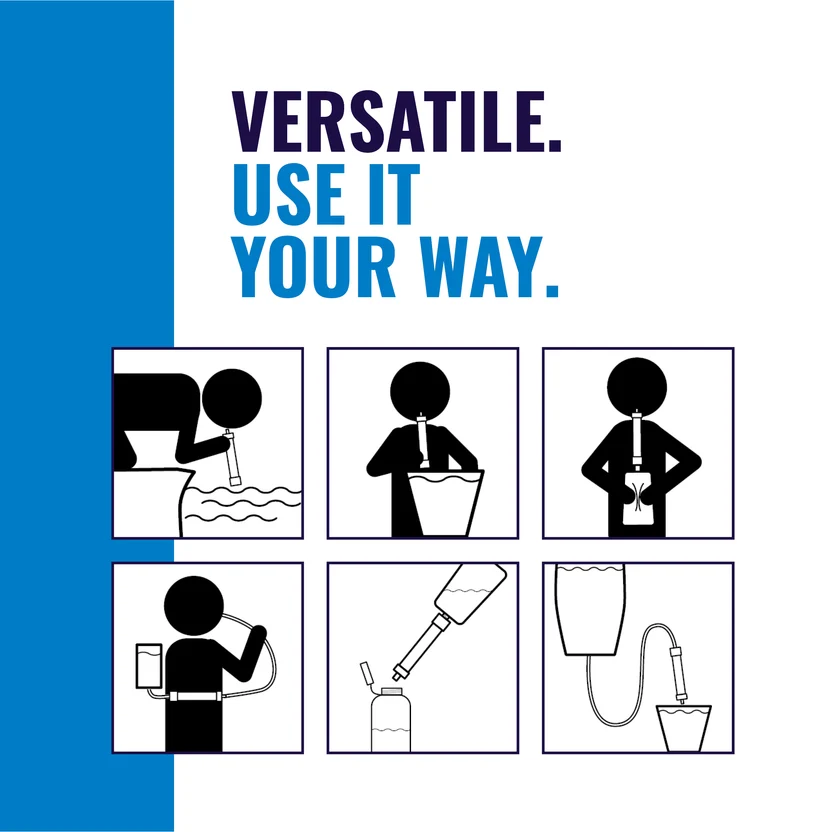
The LifeSaver Lifeline operates through a straw-style suction system. After the initial preparation specified in the instruction manual, the user places the intake end in contact with the water source and drinks through the mouthpiece, allowing the water to pass through the filtration system.
This method is particularly practical during travel and activities that require lightweight equipment.
Use with a Flexible Water Pouch
The device is compatible with LifeSaver Lifeline Squeeze Pouches, with a capacity of 600 ml, available separately.
These pouches allow water to be collected from a source and pushed through the filter by applying manual pressure.
This configuration offers greater flexibility in water collection when drinking directly from the source is not possible.
Use with a Gravity Filtration System
The LifeSaver Lifeline is also compatible with the LifeSaver gravity bag, with an approximate capacity of 3.8 litres, available separately.
The bag can be filled with water and suspended from a suitable structure, such as a tree, support frame, or vehicle.
When correctly installed, the system allows water to pass through the filter by gravity, without the need for continuous suction.
This configuration can be particularly useful in campsites, prolonged emergency situations, or when used by several members of a group.
Advantages for Emergency and Survival Kits
Including the LifeSaver Lifeline in an emergency kit allows stored drinking water supplies to be supplemented with a portable microbiological filtration system.
Its main advantages in this context include:
Operational independence: Works without electricity, batteries, or public water supply systems.
High capacity: Up to 5,000 litres of filtered water per main cartridge under the conditions specified by the manufacturer.
Portability: Lightweight and compact design, suitable for individual emergency kits and survival backpacks.
Emergency readiness: Can be stored dry and prepared for use according to the manufacturer's instructions.
Versatility: Can be used directly or with compatible water collection and filtration accessories.
Simplified maintenance: Replaceable filtration cartridge and activated carbon filter.
Long-term use: Designed for repeated use throughout the service life of the cartridge.
The LifeSaver Lifeline should form part of a broader emergency preparedness strategy that includes stored drinking water, suitable water storage containers, and additional treatment methods when necessary.
Package Contents
The product is supplied with the following components:
1 LifeSaver Lifeline personal water filter, with pre-installed main filtration cartridge, capacity up to 5,000 litres.
1 replaceable activated carbon filter, capacity up to 100 litres.
1 carrying lanyard.
1 instruction manual.
LifeSaver Lifeline Squeeze Pouch, with a capacity of 600 ml.
LifeSaver Lifeline gravity bag, with an approximate capacity of 3.8 litres.
Replacement filtration cartridges.
Replacement activated carbon filters.
Certifications and Performance Testing.
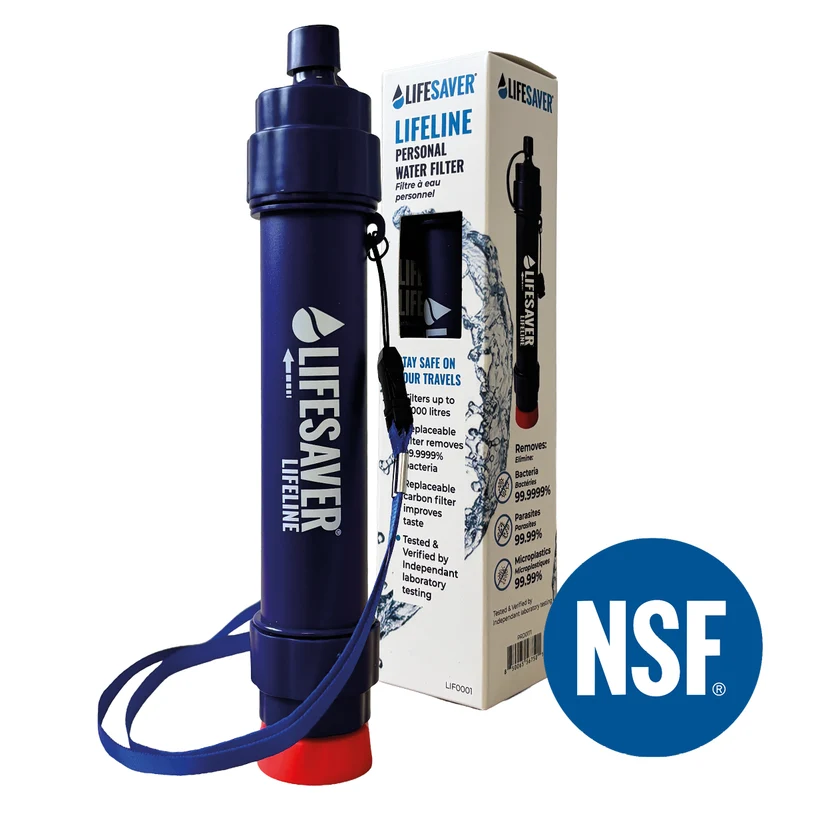
According to the documentation published by the manufacturer, the LifeSaver Lifeline has certifications and testing associated with the following standards:
NSF/ANSI 42, Class I: Certification relating to the reduction of fine particles between 0.5 and 1 micron.
NSF/ANSI 401: Certification relating to the reduction of certain emerging contaminants, including microplastics.
NSF/ANSI 372: Compliance with requirements concerning lead content in materials.
NSF/ANSI P231: Independent testing for the microbiological reduction of bacteria and protozoan cysts.
The certifications and tests mentioned apply to the specific parameters evaluated and do not constitute certification for the universal removal of contaminants.
Maintenance and Storage
To preserve the operating condition of the LifeSaver Lifeline, the manufacturer's instructions for use, cleaning, and maintenance must be followed.
Cleaning After Use
After use, the device should be rinsed according to the instructions in the manual to remove accumulated residues and particles.
Drying and Storage
The LifeSaver Lifeline does not need to remain wet during storage. After proper cleaning, it should be allowed to dry completely before being stored.
Filter Replacement
The main cartridge has a declared capacity of up to 5,000 litres, while the activated carbon filter has a capacity of up to 100 litres.
Components should be replaced according to the manufacturer's recommendations, taking into account usage and equipment performance.
Inspection Before Use
Before each use, it is recommended to check the physical condition of the filter, connections, and mouthpiece. Do not use damaged components or continue using the device once the cartridge has reached the end of its service life.
Limitations and Safety Precautions
The LifeSaver Lifeline is a microbiological water filter and should not be confused with a purifier capable of removing all types of contaminants.
Viruses: The device is not designed to remove viruses. Where viral contamination is possible, suitable additional treatment is required.
Chemical contamination: The activated carbon filter does not universally remove chemicals, heavy metals, or toxic substances.
Saltwater: The device cannot desalinate seawater.
Floodwater: It should not be used as the sole treatment method for water potentially contaminated with sewage, industrial chemicals, hydrocarbons, or other hazardous substances.
Water from unknown sources: Filtration does not guarantee the safety of water where the type of contamination is unknown.
Storage conditions: The manufacturer's instructions must be followed, including precautions regarding extreme temperatures and membrane integrity.
Filtration capacity: Maximum filtration volume and flow rate depend on water characteristics, including turbidity and the amount of suspended particles.
In emergency situations, bottled water or other sources with confirmed drinking water quality should be prioritised. The LifeSaver Lifeline provides an alternative filtration option within its technical capabilities
Total estimated delivery time
After confirming your order on Portugal Bunkers & Shelters, you will receive a confirmation email with all product information, prices and taxes.
After we submit your request, you will receive an email again confirming that your order has been sent.
The total time required to receive an order is as follows:
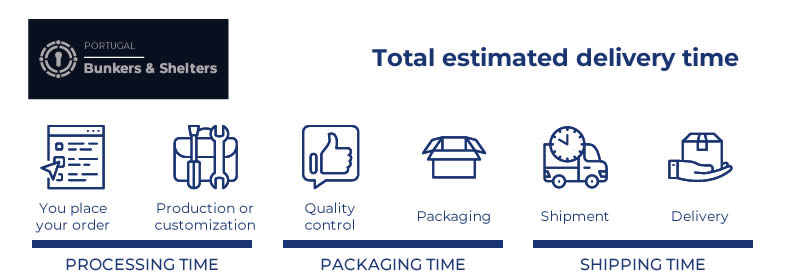
Total shipping time is calculated from the time your order is placed to the time it is shipped. Total delivery time is divided into processing time and shipping time.
Processing Time: The time required to analyse your order and prepare the products for shipment from our warehouse. This includes, in some cases, the production or customisation of products.
Packaging time: The time required to package the products. This includes the quality control checks when products were customised.
Delivery Time: The time it takes for the product to ship from our warehouse to your shipping address.
Delivery time may be conditioned by the address you enter in your purchase.
If you require further information, please contact our customer service.
We would be happy to support you with your purchase.